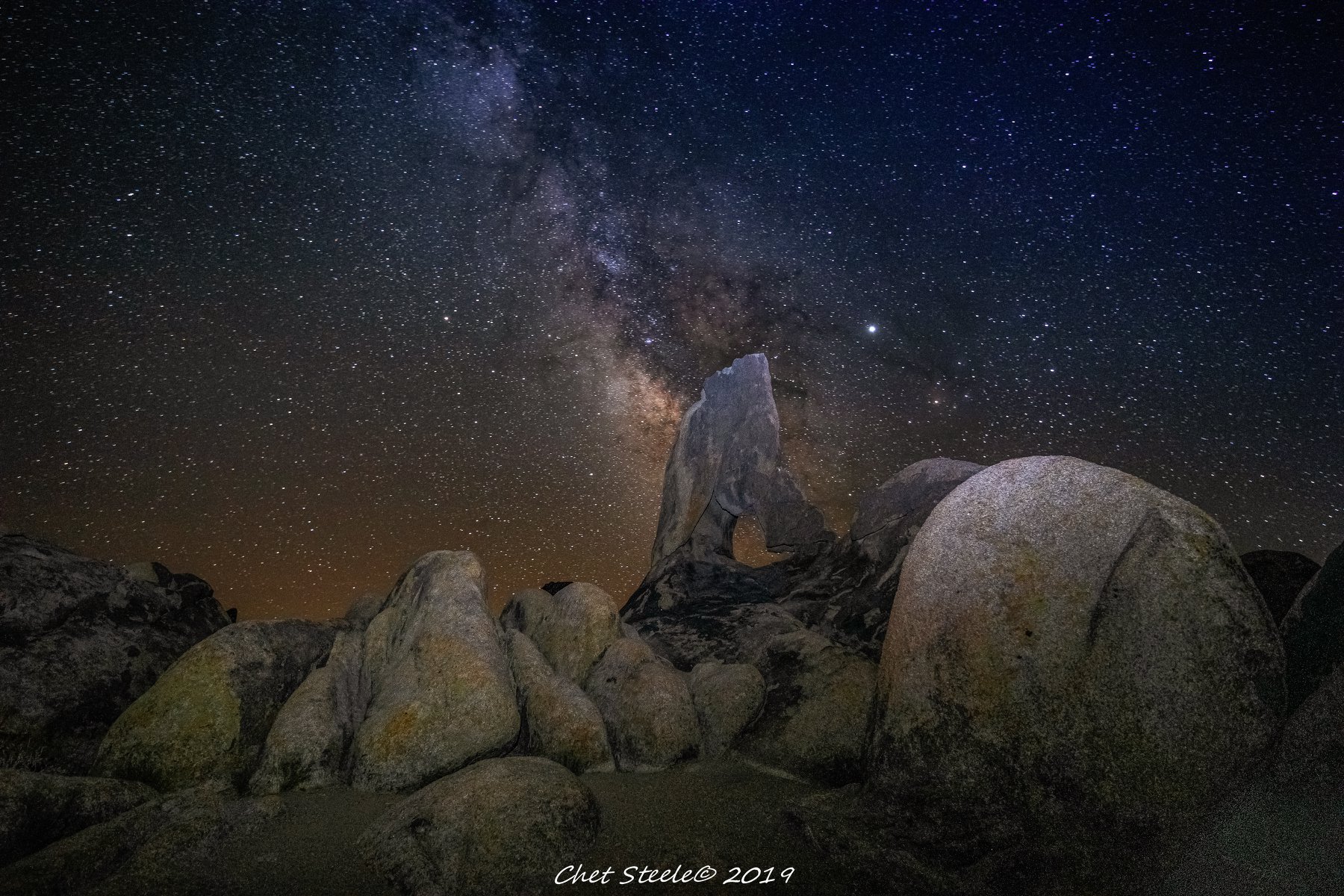

The Milky Way has always been one of my astrophotography goals to capture. This year I plan on taking as many opportunities as possible to shoot it in our night skies. Living in the desert and mountains offers ample dark skies to shoot this amazing feature in the sky. I will be starting a Milky Way series of articles throughout the year highlighting each of my Milky Way shoots. Be sure to subscribe to receive notifications when new articles are released.
What is the Milky Way?
The Milky Way is a hazy band of light produced by the stars throughout the solar system where earth resides. The Milky Way is a spiral galaxy consisting of stars and planets throughout. According to the American Museum of National History, our galactic home is called Milky Way after its Milky white appearance.
Viewing the Milky Way
In order to have a good view of the Milky Way at night you must have these three features:
- Clear sky – no clouds
- Minimal light pollution – too much light will wash out the details in the night sky
- No moon – the moon puts off very bright light which reduces visibility for viewing the Milky Way
Clear Sky
You need a clear sky, the summer months are the best time of year to view the Milky Way. Before adventuring out to view the Milky Way, be sure to check your weather for clear skies and no clouds.
To help you out, Clear Sky Chart is a good resource showing you when the sky will be clear and dark at specific observing sites across North America.
Light Pollution
When looking for the Milky Way, it is extremely important to be in a dark location far from city lights.
Light pollution is caused by excessive artificial light created in cities. This extra light reduces the ability to see stars. You may have to drive out 100+ miles from a big city until you get to the true dark sky – according to the Bortle Dark Sky Scale.
Moonlight
Be sure the moon is not in the night sky when wanting to view the Milky Way. Even if you are far away from city lights the moon will shine bright preventing you from seeing the Milky Way. The sky must be very dark to see the stars of the galaxy with your naked eye. The presence of the moon will wash out the light of the stars, just like light pollution from the cities.
Maximize Milky Way Viewing Experience
In order to get the best viewing experience of the Milky Way you will need the darkest skies as mentioned before. One key component is to understand moon phases. The best time to view the Milky Way is dark, clear skies during the new moon.
Why is a new moon the best time to view the Milky Way? A new moon offers the longest darkest skies of the year. If the Milky Way is in the sky at 10pm and a brightened moon is up at midnight, then you only get an hour or two to view. During the new moon the moon does not cast any unnecessary light on the sky. These will be your darkest nights providing the best Milky Way viewing experiences.
When Is the Best Time of Year to View the Milky Way?
The Galactic Center of the Milky Way is surrounded by dust, gas and stars. This is the most intense and dramatic part of the Milky Way making it the primary goal for viewing.
The best time to view this part of the Milky Way will be March through September in the Northern Hemisphere. Some call this “The Milky Way Season”. The reason the best viewing times change throughout the year is due to the way earth spins on its axis.
It appears in March horizontally and rotates about 180 degrees through September.
Equipment for Photographing the Milky Way
Equipment necessary to photograph the Milky Way:
- Quality camera with wide-angle lens with f/2.8 or lower aperture
- Good tripod
- Remote shutter release
My current equipment:
- Camera – Canon EOS R
- Lens – Canon RF 24-105mm f/4 L IS
- Tripod – Vanguard VEO 265 AB
Hopeful future equipment:
- 15-35mm f/2.8 or f/1.4 lens
Conclusion
We are officially in the Milky Way season as I’m writing this article. I have been tracking the Milky Way in our local skies the past couple weeks. It becomes visible in our sky just over the eastern skyline a little after 2am and appears at its highest point around 5am.
I plan to shoot the Milky Way throughout the season as it rotates throughout the night sky. The goal is to capture as many amazing images from many different locations. I will create a number of articles highlighting each photo outing I take of the Milky Way. Be sure to subscribe in order to receive notification when I release each new article.
As always, please rate this article and leave a comment in the comments section below.
1 Comment
Comments are closed.